2,000 years ago, Jesus Christ gave his disciples exactly four prophecies about the last days. In Matthew 24, he told them that when you see these events happening all over the world, you are approaching the very end. But here is the problem. Most Christians do not fully understand what Jesus was saying in these verses. Here we will decode Matthew 24 completely, so you can understand exactly what Jesus was saying and what it means for you as a believer.
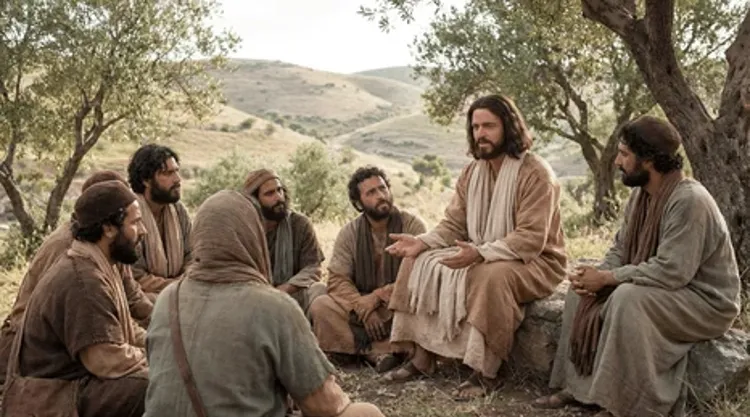
Matthew 24 begins on the Mount of Olives. The disciples had just left the temple when Jesus made a statement that stopped them cold: that the entire structure would be torn to the ground. Shaken, they pulled him aside privately and asked three questions. “When will this happen? What will be the sign of your coming? And what will signal the end of the age?”
What Jesus said next was not a sermon. It was not a parable. It was a precise, structured briefing: four prophetic movements that would mark the final generation before his return. Everything he said was deliberate. Everything he said was sequential. And everything he said came with a command attached. Most people read Matthew 24 looking for the signs. Here we read it looking for the orders.
Prophecy 1: The Birth Pains Increase
The very first thing Jesus says in Matthew 24 is not a prophecy. It is a command:
And Jesus answered and said unto them, Take heed that no man deceive you.
Matthew 24:4
Most prophecy teachers skip straight to the disasters. Jesus did not. He started with deception because deception is the weapon that turns every sign that follows into a trap. The signs are real, but without the warning, the signs themselves become the instrument of your undoing.
Then he lists what is coming: wars and rumors of wars, nation rising against nation, kingdom against kingdom, famines, and earthquakes in various places. Jesus names these and then says something most people skip. All these are the beginning of birth pains. Not the end, not the climax, the beginning. The Greek word translated as birth pains is odin. It is the same word used throughout the Septuagint for labor contractions.
Birth pains do not begin at maximum intensity. They begin slowly. They increase in frequency. They increase in intensity. They are irreversible once they start, and they do not stop. They accelerate until the moment of delivery. Jesus is giving his disciples a diagnostic framework. When you see these things accelerating, not merely happening but accelerating, you are in the early stages of a sequence that will not reverse.
Isaiah used this same image 700 years before Christ:
Like as a woman with child, that draweth near the time of her delivery, is in pain, and crieth out in her pangs; so have we been in thy sight, O Lord.
Isaiah 26:17
He described a people in anguish, writhing like a woman in labor as the moment of the Lord’s visitation approached. The prophet and the Messiah are describing the same thing: a process, a sequence, a movement toward a specific, unavoidable event.
Revelation 6 expands the picture further. The four horsemen (conquest, war, famine, death) ride in sequence, not simultaneously but sequentially. Each one is released after the other.
And I saw when the Lamb opened one of the seals, and I heard, as it were the noise of thunder, one of the four beasts saying, Come and see.
And I saw, and behold a white horse: and he that sat on him had a bow; and a crown was given unto him: and he went forth conquering, and to conquer.
And when he had opened the second seal, I heard the second beast say, Come and see.
And there went out another horse that was red: and power was given to him that sat thereon to take peace from the earth, and that they should kill one another: and there was given unto him a great sword [War].
And when he had opened the third seal, I heard the third beast say, Come and see. And I beheld, and lo a black horse; and he that sat on him had a pair of balances in his hand.
And I heard a voice in the midst of the four beasts say, A measure of wheat for a penny, and three measures of barley for a penny; and see thou hurt not the oil and the wine [Famine].
And when he had opened the fourth seal, I heard the voice of the fourth beast say, Come and see.
And I looked, and behold a pale horse: and his name that sat on him was Death, and Hell followed with him. And power was given unto them over the fourth part of the earth, to kill with sword, and with hunger, and with death, and with the beasts of the earth.
Revelation 6:1-8
The pattern Jesus named on the Mount of Olives is the same pattern John saw on Patmos. It is the same sequence described by three different witnesses written across centuries. Now look at the world, not at individual headlines, but at the pattern. Wars are not simply occurring; they are multiplying. The unprecedented military confrontation between the United States and Iran has not just destabilized the Middle East, it has choked global trade routes and joined the highest number of active conflicts recorded since World War II.
Food insecurity is not a local crisis in a developing region; it is a measurable global acceleration. The UN reports that over 2.3 billion people are now facing moderate to severe food insecurity, and seismic activity is shifting from a routine natural hazard to an unprecedented human catastrophe because of expanding global populations. More people are exposed to high-risk fault lines today than at any point in recorded history.
The question Jesus asks you to answer is not whether these things are happening: they have always happened. The question is whether the impact is accelerating, because acceleration is the diagnostic marker. Acceleration means you are in the early stages. The birth pains are dangerous not because they are catastrophic, but because they feel like the end without being it. The believers who panic at the early contractions will be exhausted, disillusioned, and spiritually depleted when the real moment arrives.
Jesus inoculated his followers against premature panic. He named the signs not to terrify them, but to diagnose the stage. Stay grounded. Recognize where you are in the sequence. Do not waste your endurance on the warm-up. The contractions are not the crisis. The crisis is what most people will do when the contractions start. This is exactly why Jesus anchored these warnings with a direct command:
And ye shall hear of wars and rumors of wars: see that ye be not troubled: for all these things must come to pass, but the end is not yet.
Matthew 24:6
He told them the world would shake and, in the exact same breath, gave the operational order not to panic. For the believer, recognizing the signs is not an invitation to fear. It is a mandate to remain completely untroubled. But Jesus does not stop at the world outside the church. He turns the view inward. And what he sees inside the church is far more alarming than anything happening in the nations.
Prophecy 2: The Collapse Within and the Deception Without
Jesus does not move from the birth pains to a second list of global disasters. He moves inward. What he describes next is not what happens to the world; it is what happens to the church. He details three fractures, three internal collapses in sequence.
First, persecution produces hatred from the outside:
Then shall they deliver you up to be afflicted, and shall kill you: and ye shall be hated of all nations for my name’s sake.
Matthew 24:9
The hostility is not regional; it is global. It is not directed at a denomination; it is directed at the name. To confess Christ in the age Jesus is describing will carry a social, legal, and in many cases, physical cost.
Second, betrayal produces fracture from the inside. The Greek word is skandalizo, meaning to cause to stumble, to become a trap to another. When the cultural cost of following Jesus becomes too high, self-preservation disguises itself as theological progress. The community built on mutual love becomes the instrument of mutual destruction. This is not an attack from atheists; it is betrayal from within, by people who sat in the same pews, prayed at the same altars, and claimed the same Lord.
Third, the love of many grows cold. Not a few, not the fringe, many. The Greek word is psucho, which means to breathe out, to lose warmth through prolonged exposure to wind. Love does not die suddenly in Matthew 24; it cools slowly. You do not have to guess what this looks like; you are watching it live. Historic denominations that stood for centuries are fracturing overnight, voting to abandon biblical authority to appease a culture that hates them anyway. Pulpits have traded the call to repentance for the language of modern therapy. Sins that the early church died refusing to endorse are now celebrated at the altar under the banner of compassion. No one announces the departure; the church simply breathes out and cools. What the modern world praises as deconstruction, Jesus diagnosed 2,000 years ago as spiritual hypothermia.
The trend is not reversing. But Jesus does not leave it there. He gives the antidote:
He that endureth to the end shall be saved.
Matthew 24:13
Not the most passionate, not the most gifted: the one who endures. Endurance is holding the line when the institutions that taught you the faith are abandoning it. Not performance, not perfection: endurance. And then he gives the trigger condition:
And this gospel of the kingdom shall be preached in all the world for a witness unto all nations; and then shall the end come.
Matthew 24:14
This is not just a sign; it is a completion marker. When every nation has received the witness, the end sequence begins. Through digital technology, translation projects, and global missionary reach, that threshold is closer than at any point in human history.
Jesus is not describing the world going dark; he is describing the church going quiet. The falling away is quiet: empty pews, unanswered prayers, sermons that sound right but cost nothing. The church simply cools. But the deception that follows is loud. It arrives with miracles, with confidence, with answers to every question the cooling church stopped asking. The false Christs do not invade a strong church; they fill an empty one.
Then if any man shall say unto you, Lo, here is Christ, or there; believe it not.
For there shall arise false Christs, and false prophets, and shall show great signs and wonders; insomuch that, if it were possible, they shall deceive the very elect.
Matthew 24:23-24
The miracles are real. The signs are real. The deception is not atheism; it is religious. It looks like worship. It sounds like faith. It offers the ultimate bait: the kingdom without the cross, revival without repentance, a Christ who perfectly agrees with the culture. The filtering mechanism is not intelligence, not theological training, not years in the church: it is intimacy with the word. The believer who knows scripture, not headlines, not prophecy charts, not Christian social media, is the one who will recognize the counterfeit when it stands before them performing miracles. The most dangerous figure in the last days will not look evil. They will look like the answer to every problem the cooling church created by drifting away. Do not drift from the source. Your Bible is your only defense against sophisticated religious deception. The generation that ignores the instructions while memorizing the signs will be the most dangerous generation of all. But all of this, the birth pains, the falling away, the false prophets, is prologue, because Jesus is building toward one moment, one specific, visible, datable event. And when it happens, he does not say pray about it. He does not say seek counsel. He says one word: run.
Prophecy 3: The Abomination of Desolation
This is the only moment in the entire discourse where Jesus issues a direct, unconditional, time-sensitive operational command. It is not a principle to meditate on, not a truth to internalize over time, but a command with a deadline measured in minutes.
When ye therefore shall see the abomination of desolation, spoken of by Daniel the prophet, stand in the holy place, (whoso readeth, let him understand:) Then let them which be in Judea flee into the mountains.
Matthew 24:15-16
Jesus pauses the briefing and inserts a parenthetical: let him understand. He is flagging this as the hinge point of everything that follows. He is quoting Daniel directly:
And he shall confirm the covenant with many for one week: and in the midst of the week he shall cause the sacrifice and the oblation to cease, and for the overspreading of abominations he shall make it desolate, even until the consummation, and that determined shall be poured upon the desolate.
Daniel 9:27
Daniel predicted this exact sequence 600 years before Christ was born. Before the Antichrist is a tyrant, he is a savior. The sequence begins with a global peace treaty. The world will be desperate for a solution to the birth pains, and this man will provide it. But it is a false peace. The abomination of desolation is the moment the mask comes off.
Three and a half years into the covenant, the man who saved the world walks into the rebuilt Jewish temple in Jerusalem, stops the sacrifices, and demands to be worshiped as God. This specific act of blasphemy is the trigger. And Jesus says, “When you see it, move. Do not go down from the rooftop to take anything from your house. Do not return from the field to retrieve your cloak. Woe to those who are pregnant and to those who are nursing. Pray that your flight will not be in winter or on the Sabbath.” The window of escape will be measured in hours. Every minute spent retrieving possessions, debating options, or seeking confirmation is a minute closer to the door slamming shut.
Luke adds the fail-safe:
And when ye shall see Jerusalem compassed with armies, then know that the desolation thereof is nigh.
Luke 21:20
If you are confused by the politics, you will not be confused by the military. The armies are the visible sign. The abomination is the spiritual sign. Together they form a dual confirmation system. You will see both, and when you do, move.
For then shall be great tribulation, such as was not since the beginning of the world to this time, no, nor ever shall be.
Matthew 24:21
This is the only event in all of Matthew 24 that Jesus describes as potentially extinction-level.
And except those days should be shortened, there should no flesh be saved.
Matthew 24:22
No human being would survive. This is why the command allows no deliberation. The Son of God, who walked into every dangerous situation without flinching, who stood before Pilate without fear, who went to the cross without resistance, told his people to run. That alone should stop you cold.
There was a generation that heard these words and took them literally. Before the Roman siege of Jerusalem, the Christian community received a warning. They had a decision to make before the legions closed the roads: to leave everything, their homes, their businesses, their neighbors who thought they were insane for going. They crossed the Jordan River to a small town called Pella. Months later, the Roman general Titus arrived. Josephus records over 1 million dead. The temple was destroyed. Roman soldiers tore the stones apart to scrape out gold that had melted into the cracks, fulfilling the words Jesus spoke on the Mount of Olives to the letter:
And Jesus said unto them, See ye not all these things? verily I say unto you, There shall not be left here one stone upon another, that shall not be thrown down.
Matthew 24:2
The Christians at Pella watched from across the river. They survived, not because they were strategic, not because they had resources, but because they took Jesus at his word before the crisis arrived. They chose the command over their comfort. They chose obedience over everything they owned. He told them; they listened. The Pella believers did not have more faith than other believers. They had a decision made before the crisis to trust the words of Jesus more than their own instincts. When the moment came, they did not debate; they moved.
The command for every believer today is this: make that decision now, before the pressure arrives. Decide in advance that you will obey the word even when it costs you everything you have built, everything you own, everything that feels like security. The worst time to decide is in the middle of the crisis, because in the middle of the crisis, your instincts will tell you to stay, and staying will cost you everything.
Prophecy 4: The Sign of the Son of Man
After the tribulation, not during it but after, the darkest period in human history ends, and then the cosmos announces what is coming.
Immediately after the tribulation of those days shall the sun be darkened, and the moon shall not give her light, and the stars shall fall from heaven, and the powers of the heavens shall be shaken.
Matthew 24:29
Three prophets, three independent witnesses, centuries apart, describe the same sequence.
Isaiah, writing 700 years before Christ, says:
For the stars of heaven and the constellations thereof shall not give their light: the sun shall be darkened in his going forth, and the moon shall not cause her light to shine.
Isaiah 13:10
Joel, writing 800 years before Christ, says:
The sun shall be turned into darkness, and the moon into blood, before the great and the terrible day of the Lord come.
Joel 2:31
And then John on Patmos, in Revelation 6, sees the sixth seal opened and describes the same sequence: sun black, moon like blood, stars falling, the sky rolled back like a scroll. Three witnesses, one event, written across eight centuries. This is not metaphor. This is convergence.
The sun fails. The moon bleeds. The stars fall. And then:
And then shall appear the sign of the Son of Man in heaven: and then shall all the tribes of the earth mourn, and they shall see the Son of Man coming in the clouds of heaven with power and great glory.
Matthew 24:30
This is exactly why Jesus described the false Christs in Prophecy 2. Before describing his real return, he established the contrast first. The false Christs require an announcement. They need someone to say:
Then if any man shall say unto you, Lo, here is Christ, or there; believe it not.
Matthew 24:23
They depend on people not knowing what the real return looks like.
The real return requires no announcement. It will be like lightning, east to west, visible to every human eye on the planet simultaneously. No one will need to tell you. If someone tells you Christ has returned and you did not see it yourself, that is not Christ. Every tribe mourns, not some tribes, not just the tribes that rejected him, every tribe. This is not mourning in hopelessness. It is mourning in recognition. They finally see what they dismissed, what they ignored, what they mocked. The one they said was not coming arrives in undeniable, uncontestable, universe-splitting glory.
And he shall send his angels with a great sound of a trumpet, and they shall gather together his elect from the four winds, from one end of heaven to the other.
Matthew 24:31
This is not how a disaster story ends. This is how a rescue operation ends. The angels are dispatched. The trumpet sounds. The elect are gathered from every corner of the earth. Every believer who endured. Every believer who did not drift. Every believer who moved when the command came. Every believer who held oil in their lamp, collected from one end of heaven to the other. Written 700 years before Bethlehem, confirmed on a hillside outside Jerusalem, sealed in the revelation, happening at the end of the age. The end of this story is not destruction. It is coronation. Every birth pang, every betrayal, every cold church, every false prophet, every moment of persecution leads to this. The believer’s position is not terror. It is anticipation. You are not watching the world fall apart. You are watching the stage being set for a king.
The Mirror: The Parable of the Ten Virgins
Jesus does not stop after the cosmic signs. Still the same hillside, still the same evening, still the same briefing. But he pivots. He stops telling them what will happen and starts asking whether they will be ready when it does.
Ten virgins, all of them waiting for the bridegroom. All of them knew he was coming. All of them had lamps. All of them fell asleep while they waited.
Then shall the kingdom of heaven be likened unto ten virgins, which took their lamps, and went forth to meet the bridegroom.
And five of them were wise, and five were foolish.
They that were foolish took their lamps, and took no oil with them:
But the wise took oil in their vessels with their lamps.
While the bridegroom tarried, they all slumbered and slept.
And at midnight there was a cry made, Behold, the bridegroom cometh; go ye out to meet him.
Then all those virgins arose, and trimmed their lamps.
And the foolish said unto the wise, Give us of your oil; for our lamps are gone out.
But the wise answered, saying, Not so; lest there be not enough for us and you: but go ye rather to them that sell, and buy for yourselves.
And while they went to buy, the bridegroom came; and they that were ready went in with him to the marriage: and the door was shut.
Matthew 25:1-10
While they were gone, the bridegroom arrived. The five who were ready went in with him to the wedding feast, and the door was shut. The other five came back. They knocked, and the bridegroom said the words that should stop every reader cold:
Afterward came also the other virgins, saying, Lord, Lord, open to us.
But he answered and said, Verily I say unto you, I know you not.
Watch therefore, for ye know neither the day nor the hour wherein the Son of man cometh.
Matthew 25:11-13
The oil is not knowledge of the signs. It is not the ability to identify the four prophecies in this chapter. It is not attendance at a Bible-believing church. It is not theological precision or prophetic literacy. The oil is an intimate, daily, unglamorous relationship with God built through prayer, through the word, and through obedience, constructed over years, not manufactured in a crisis. It cannot be borrowed. It cannot be transferred. It cannot be purchased at midnight when the bridegroom arrives. Five had it, five did not, and the door did not reopen. There are two groups of believers reading this right now. Both know the signs. Both can name the prophecies. Both believe Jesus is returning. Only one group has oil, and the door does not reopen. He told them; they didn’t listen.
Conclusion: The Prepared Believer
Jesus did not give Matthew 24 as a timeline of disasters to fear. He gave it as a survival briefing to prepare a specific generation, and to tell them exactly what to do at every stage of what is coming.
The birth pains say, “Do not panic prematurely. Recognize the stage. Conserve your endurance for what is actually coming.”
The collapse and the deception say, “Do not drift gradually. Guard your intimacy with the word. Guard it daily.” The believer who drifts in the quiet season will not recognize the counterfeit when it arrives performing miracles.
The abomination says, “Do not hesitate at the critical moment.” The decision to obey must be made before the crisis arrives. The Pella believers did not decide to trust Jesus when the legions appeared; they had already decided.
The sign of the Son of Man says, “Do not despair. This does not end in chaos. It ends in coronation.” Every dark thing happening right now is moving toward a moment when the king arrives and every eye sees him.
The ten virgins say, “Do not assume you are ready.” Knowing the signs is not the same as having oil. Watching the news through a prophetic lens is not the same as walking with God daily in the ordinary, unglamorous disciplines of the faith.
Four commands, one parable, one chapter, one generation that will need every single one of them. The generation that ignores the instructions while memorizing the signs will be the most dangerous generation of all. Do not be that generation. The command Jesus gave is not a command of fear. It is a command of foreknowledge. He told you what was coming because he already knows how it ends. He is not a prophet guessing at the future; he is the author reading from his own manuscript.
The same Jesus who said flee also said:
And if I go and prepare a place for you, I will come again, and receive you unto myself; that where I am, there ye may be also.
John 14:3
Both statements are equally certain. Both are equally his. He sat on that hillside. He told them everything: the signs, the commands, the deception, the escape, the return. He withheld nothing. And then he looked at the people who loved him most and said:
Watch therefore, for ye know not what hour your Lord doth come.
Matthew 24:42
He told them. The question is whether you are listening.
This briefing is not meant to frighten you. It is meant to prepare you, because the prepared believer is the least afraid person alive. The Mirror of Jesus Christ walks through the full case verse by verse, so you can read Matthew 24 the way the disciples first heard it on that hillside: not as a list of disasters to fear, but as the words of the one who already knows how the story ends.
Header image: the Temple Mount seen from the Mount of Olives. Photo by brionv, CC BY-SA 2.0, via Wikimedia Commons.